







01. 提价潮的底层逻辑:不是想涨,是不得不涨,更是有底气涨
这波全行业提价,并非龙头企业拍脑袋的决定,而是上游成本倒逼+下游需求支撑的必然结果。
先看最直接的成本压力:硬质合金刀具的核心原料是钨和钴,钨系原料占硬质合金生产成本的40%以上,钴粉占比约15%,二者是决定刀具价格的核心变量。
自2024年下半年以来,全球钨产业链供需失衡加剧,叠加政策管控、需求爆发等多重因素,钨粉、钴粉、碳化钨粉价格开启持续暴涨模式,屡创历史新高。
从2025年初到2026年2月25日,国内钨粉和碳化钨粉价格涨幅均超4倍,钴粉价格涨幅也超过了2倍。

上游原材料暴涨,下游产品提价其实只是对冲成本的常规操作。
但真正值得关注的,不是“为什么提价”,而是“为什么提价能成功传导”——要知道,制造业里但凡上游涨价,中下游往往要自己扛下大部分压力,敢全产业链传导提价的,少之又少。
而刀具行业之所以能持续提价,与其产品特性和全球格局高度相关。
对于下游的汽车厂、机械厂、3C工厂来说,刀具是生产环节必不可少的耗材,但它占整个产品生产成本的比例,通常只有1%-3%。
举个例子,造一辆20万的新能源汽车,刀具成本可能只有2000块钱,就算刀具涨价20%,也就多花400块钱,对于整车厂来说完全可以忽略。但如果为了省这400块钱,换了没经过验证的刀具,导致加工精度不达标、生产线停机,一小时的损失就可能几十万。
这种“成本占比低、替换成本极高”的属性,决定了下游客户对刀具的价格敏感度极低,只要产品质量过关,提价几乎不会遇到阻力。
这也是为什么,龙头公司的提价公告发布后,下游订单不仅没减少,反而持续增长。
02. 从卡脖子到反制,国产厂商的春天真的来了?
除了产品特性之外,全球竞争格局的演变也构建了提价的内在动力。
很多人对刀具行业的印象,还停留在“低端内卷、高端被海外垄断”的阶段,但现在,整个行业的竞争格局,正在发生翻天覆地的变化。
先看上游:我们手握全球最核心的资源,话语权正在快速提升。
国内钨储量占全球35%,产量占全球80%以上,几乎垄断了全球钨原料的供给。而且上游钨矿行业集中度极高,国内CR5超过60%,具备极强的定价权,这也是钨价能持续上涨的核心支撑。
更关键的是,过去我们是“卖原料的”,把钨粉料低价卖给日本、欧洲的厂商,他们做成高端刀具,再以10倍的价格卖回中国,我们赚最辛苦的钱,别人赚最高的利润。但现在,这个逻辑彻底反过来了。
2026年1月,商务部、海关总署联合发布公告,将高精度硬质合金刀具、超细晶粒硬质合金材料,纳入了对日两用物项出口管制清单。这一招,直接打在了海外巨头的七寸上。
日本是全球高端刀具的第二大生产国,三菱综合材料、OSG、住友电工等企业,占据了全球高端刀具市场30%以上的份额,但日本高端硬质合金生产所需的钨原料、超细晶粒钨粉,90%以上都要从中国进口。
之前国内很多厂商,把高端粉料卖给日本企业,日本企业做成刀具再高价卖回中国;现在管制了,日本企业拿不到高端粉料,产能直接受限,原材料成本大幅上涨,只能被迫提价。
而国内的龙头厂商,本身就具备性价比优势,还能趁机争取此前被外资企业占据的市场份额。
这也是为什么,出口管制政策发布后,刀具板块直接来了一波涨停潮——市场很清楚,这不是简单的政策调整,而是国产厂商高端替代的加速器。
再看中游:国产厂商技术突破,从“跟跑”到“抢份额”,格局正在重构。
过去几十年,全球硬质合金刀具市场,一直被海外四大巨头垄断:瑞典的山特维克、美国的肯纳金属、日本的三菱综合材料和OSG,这四家企业,占据了全球高端刀具市场70%以上的份额,国内厂商之前只能在中低端市场内卷。
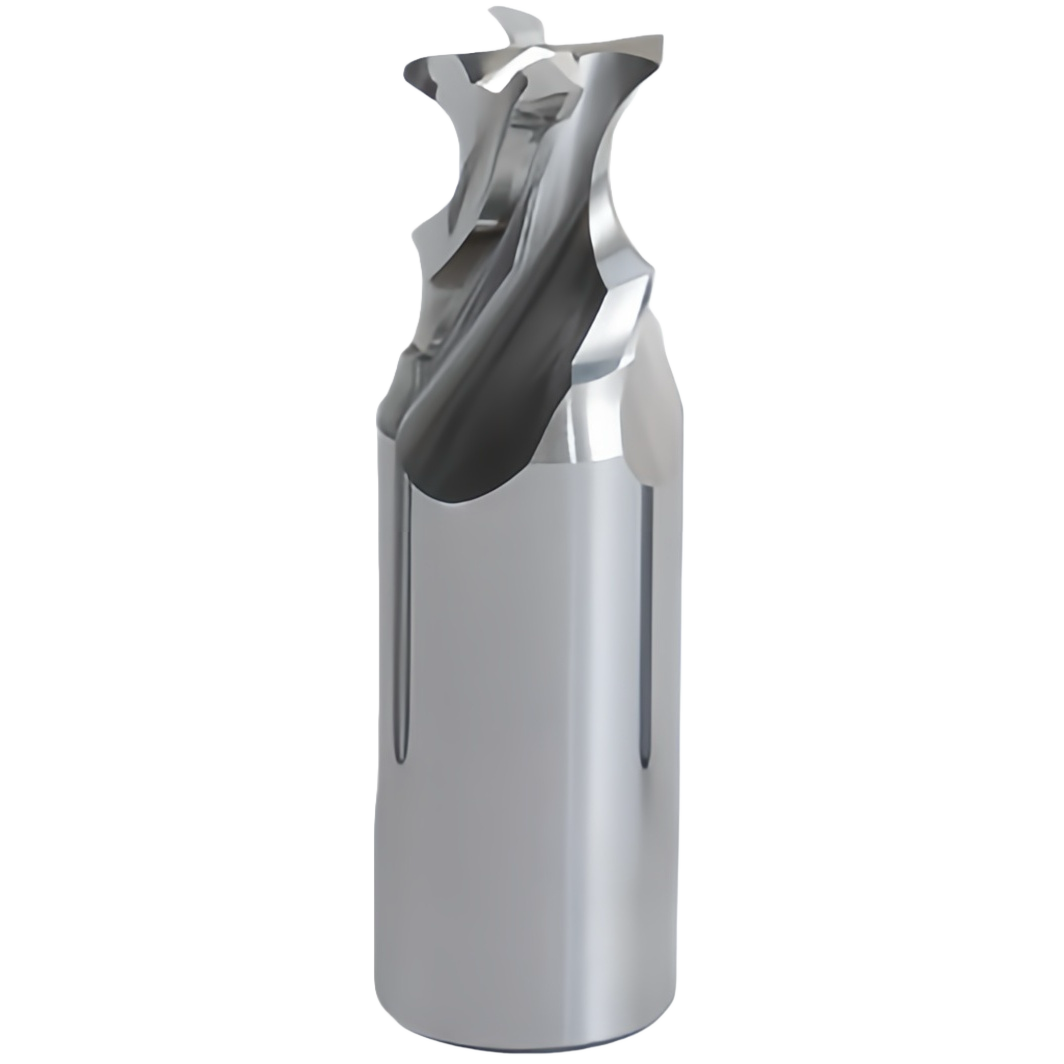
但现在,这个垄断格局正在被打破。国内龙头企业通过持续的研发投入,已经实现了核心技术的突破。比如国内知名某公司的整体硬质合金立铣刀,加工精度、使用寿命已经达到了日本OSG同类产品的90%以上,但价格只有进口产品的60%。
更关键的是,在原材料涨价、出口管制的背景下,国产厂商即便提价,相比于进口产品仍具备性价比优势,下游客户自然愿意用国产替代进口。
最后看下游客户端:需求不是复苏,是结构升级。
很多人觉得,刀具需求就是跟着机床周期走,机床涨了,刀具才会涨。但现在,刀具的需求逻辑已经变了:不是周期复苏,是高端化带来的结构性爆发。
最大的增量,来自新能源汽车。新能源汽车的单车刀具消耗量,是传统燃油车的2.5倍。传统燃油车的发动机、变速箱,加工难度相对较低;而新能源汽车的动力电池极耳、电机转子、一体化压铸模具,都需要高精度、高耐磨性的高端刀具,单价是普通刀具的3-5倍。
第二大增量,来自航空航天。国内航空航天领域的钛合金、复合材料结构件,加工难度大,需要的高端刀具,单价是普通刀具的5-10倍。目前航空航天领域的刀具,90%还是依赖进口,国产替代空间较大。
除此之外,3C电子、半导体、人形机器人等领域,高端刀具的需求也在持续爆发。这些高端需求,不是简单的“量的增长”,而是“价的提升”,一把高端刀具的价格,是普通刀具的几倍甚至十几倍,带来的利润空间,完全不是中低端产品能比的。
03. 风口之下,该怎么布局?
很多人问,刀具板块已经涨了这么多了,现在还能布局吗?答案是:行业的黄金发展期可能才刚刚开始,行业成长空间尚未到顶,但布局一定要抓准主线,避开陷阱。
首先要明确,绝对不能碰没有核心技术、只做中低端产品的中小厂商。原材料涨价会持续压缩他们的利润空间,他们没有提价能力,没有高端产品,未来只会被市场淘汰。
真正值得布局的,是三条高确定性的主线:
1、高端替代确定性强的数控刀具龙头。他们的核心优势,是业绩兑现能力强,提价红利直接,高端替代明确。而且提价带来的利润增厚,也会在2026年开始兑现。后续的核心看点,是高端产品占比持续提升、海外市场拓展加速、产能释放带来的规模效应。
2、资源+材料一体化的全产业链龙头。他们的核心优势,是上游有钨矿资源,中游有高端硬质合金粉料产能,下游有刀具业务,全产业链布局,成本控制能力最强。既能最大程度享受钨涨价的红利,又能受益于高端粉料的国产替代。
3、卡脖子环节的隐形冠军。核心是刀具涂层、精密刀柄这类配套环节的企业。很多人不知道,刀具的性能,70%靠材料,30%靠涂层。一把刀具的使用寿命、加工精度,很大程度上取决于表面的涂层技术。之前国内高端涂层市场,90%以上被海外企业垄断,是刀具行业最大的卡脖子环节。现在国内企业已经突破了金刚石涂层、立方氮化硼涂层技术,国产替代空间巨大。
对于普通投资者来说,不用贪多,抓住这三条主线里的核心标的,跟踪业绩兑现情况、高端产品占比、客户拓展进度,就能把握这波行业的确定性机遇。
不过,考虑到板块核心标的短期涨幅较大,可能已充分反映市场乐观预期,后续投资需警惕多重风险:
1、原材料价格超预期波动风险:若未来钨价继续暴涨,将大幅侵蚀企业提价带来的利润增量。
2、政策变动风险:行业景气度部分受益于对日出口管制、钨矿开采配额管控等政策,若未来相关政策出现调整,如出口管制放松、开采指标增加,将改变行业供需格局。
3、股价高位波动风险:部分标的涨幅较大,股价可能已充分反映提价、国产替代等乐观预期,后续若业绩兑现不及预期,极易引发股价大幅调整。
04. 结语
我们总在追逐高端制造的“明星赛道”,却常常忽略,真正支撑起制造业升级的,是这些不起眼的“底层耗材”。
没有硬质合金刀具的精度突破,再先进的工业母机也难以发挥价值;没有国产刀具的替代突围,高端制造的供应链安全就无从谈起。
从被海外巨头卡脖子,到主动提价、抢占高端市场,国产硬质合金刀具的崛起,不仅是一个赛道的逆袭,更是中国制造从“大”到“强”的生动缩影。
格隆汇研究院深耕高端制造产业链研究,持续跟踪硬质合金刀具行业多年,我们始终相信,真正的投资机遇,从来不在喧嚣的热点里,而在那些默默成长、持续创造价值的赛道中。
当前,硬质合金刀具行业的风口已至,提价红利持续兑现、国产替代加速推进、下游需求持续爆发,行业成长的确定性不言而喻。
注:文中所涉公司仅为产业案例分析,不构成任何投资建议。市场有风险,投资需谨慎。
特别声明:本文为网易自媒体平台“网易号”作者上传并发布,仅代表该作者观点。网易仅提供信息发布平台。
资料来源:《格隆汇》https://c.m.163.com/news/a/KMSDHPGE05198ETO.html
01. The Logic Behind the Price Hikes: Not a Desire to Raise Prices, but a Necessity – and with the Leverage to Do So
This round of industry-wide price increases is not a rash decision made by leading enterprises, but an inevitable result driven by upstream cost pressures and supported by downstream demand.
Let's first look at the most direct cost pressure: the core raw materials for cemented carbide tools are tungsten and cobalt. Tungsten-based materials account for over 40% of cemented carbide production costs, while cobalt powder accounts for about 15%. These two are the core variables determining tool prices.
Since the second half of 2024, the supply-demand imbalance in the global tungsten industry chain has intensified. Coupled with factors like policy controls and surging demand, prices of tungsten powder, cobalt powder, and tungsten carbide powder have begun a sustained surge, repeatedly hitting record highs.
From the beginning of 2025 to February 25, 2026, domestic prices for tungsten powder and tungsten carbide powder have both risen by over 400%, while cobalt powder prices have increased by more than 200%.
The sharp rise in upstream raw material prices makes downstream product price increases a standard operation to hedge costs.
But what's truly worth paying attention to is not "why raise prices," but "why can the price increases be successfully transmitted downstream?" — In manufacturing, whenever upstream prices rise, midstream and downstream players usually have to absorb most of the pressure themselves. Very few dare to pass the increase through the entire industry chain.
The reason the tool industry can sustain price increases is highly correlated with its product characteristics and the global competitive landscape.
For downstream automotive plants, machinery factories, and 3C manufacturers, tools are essential consumables in the production process, but they typically account for only 1%-3% of the total product cost.
For example, building a 200,000 RMB new energy vehicle might involve a tool cost of only 2,000 RMB. Even if tool prices rise by 20%, that's an extra 400 RMB, which is negligible for the vehicle manufacturer. However, if they try to save that 400 RMB by switching to unverified tools, leading to substandard machining accuracy or production line stoppages, the loss from just one hour of downtime could be hundreds of thousands of RMB.
This attribute – "low cost proportion, extremely high replacement cost" – results in very low price sensitivity among downstream customers for tools. As long as product quality is reliable, price hikes face almost no resistance.
This is also why, after leading companies announced price increases, downstream orders did not decrease but continued to grow.
02. From Bottleneck to Countermeasure: Has the Spring Really Arrived for Domestic Manufacturers?
Beyond product characteristics, the evolution of the global competitive landscape has also built the intrinsic momentum for price increases.
Many people's impression of the tool industry still remains at the stage of "low-end involution, high-end monopolized by foreign companies." But now, the competitive landscape of the entire industry is undergoing earth-shattering changes.
First, look upstream: we hold the world's most core resources, and our bargaining power is rapidly increasing.Domestic tungsten reserves account for 35% of the global total, and output accounts for over 80%, almost monopolizing the global supply of tungsten raw materials. Moreover, the upstream tungsten mining industry is highly concentrated, with a domestic CR5 (five-firm concentration ratio) exceeding 60%, giving it strong pricing power, which is the core support for the continued rise in tungsten prices.
More critically, in the past, we were "raw material sellers," selling tungsten powder and materials cheaply to Japanese and European manufacturers. They would make high-end tools and sell them back to China at ten times the price. We earned the hardest money, while others pocketed the highest profits. But now, this logic has completely reversed.
In January 2026, China's Ministry of Commerce and the General Administration of Customs jointly issued an announcement, adding high-precision cemented carbide tools and ultra-fine grain cemented carbide materials to the export control list for dual-use items to Japan. This move struck directly at the Achilles' heel of overseas giants.
Japan is the world's second-largest producer of high-end tools. Companies like Mitsubishi Materials, OSG, and Sumitomo Electric hold over 30% of the global high-end tool market share. However, Japan relies on China for over 90% of the tungsten raw materials and ultra-fine tungsten powder needed for high-end cemented carbide production.
Previously, many domestic manufacturers sold high-end powder materials to Japanese companies, who would then make tools and sell them back to China at high prices. Now with controls in place, Japanese companies cannot access high-end powder materials, their production capacity is directly constrained, raw material costs have risen sharply, and they are forced to raise prices.
Domestic leading manufacturers, already possessing a cost-performance advantage, can also seize the market share previously held by foreign companies.
This is why the tool sector experienced a wave of limit-up stock movements immediately after the export control policy was announced – the market understood clearly that this was not a simple policy adjustment, but an accelerator for high-end substitution by domestic manufacturers.
Now look at the midstream: domestic manufacturers have achieved technological breakthroughs, moving from "following" to "grabbing market share," and the landscape is being reshaped.
For decades, the global cemented carbide tool market has been monopolized by four major overseas giants: Sweden's Sandvik, the United States' Kennametal, Japan's Mitsubishi Materials, and OSG. These four companies held over 70% of the global high-end tool market share, leaving domestic manufacturers previously struggling in the mid-to-low-end market.
But now, this monopoly is being broken. Domestic leading enterprises, through continuous R&D investment, have achieved breakthroughs in core technologies. For example, the solid carbide end mills from a well-known domestic company have achieved machining accuracy and service life exceeding 90% of comparable Japanese OSG products, but at only 60% of the price of imported ones.
More crucially, in the context of rising raw material prices and export controls, even when domestic manufacturers raise prices, they still maintain a cost-performance advantage over imported products, making downstream customers naturally willing to substitute imports with domestic products.
Finally, look at the downstream customer side: demand is not about recovery, but structural upgrading.
Many people think tool demand simply follows the machine tool cycle – when machine tools go up, tools go up. But now, the demand logic for tools has changed: it's not cyclical recovery, but a structural explosion driven by high-end applications.
The biggest growth comes from new energy vehicles. The tool consumption per new energy vehicle is 2.5 times that of a traditional fuel vehicle. Traditional fuel vehicles have relatively lower machining difficulty for engines and transmissions. In contrast, new energy vehicle components like power battery tabs, motor rotors, and integrated die-casting molds require high-precision, high-wear-resistance high-end tools, which cost 3-5 times more than ordinary tools.
The second largest growth area is aerospace. Titanium alloys and composite structural components in the domestic aerospace field are difficult to machine and require high-end tools that cost 5-10 times more than ordinary tools. Currently, 90% of tools used in aerospace are still imported, leaving significant room for domestic substitution.
Beyond these, demand for high-end tools is also surging in areas like consumer electronics, semiconductors, and humanoid robotics. This high-end demand is not simply "volume growth," but "value enhancement." The price of a single high-end tool is several times or even ten times that of an ordinary tool, generating profit margins that mid-to-low-end products simply cannot match.
03. How to Position Yourself in This Favorable Trend?
Many people ask: the tool sector has already risen so much, can we still position ourselves now? The answer is: the industry's golden development period may have just begun, and the growth space is not yet capped. However, positioning must focus on the main themes and avoid traps.
First, it's crucial to avoid small and medium-sized manufacturers without core technology that only produce mid-to-low-end products. Rising raw material prices will continuously compress their profit margins. They lack pricing power and high-end products, and will only be eliminated by the market in the future.
What's truly worth positioning in are three highly certain main themes:
-
Leading CNC tool manufacturers with strong high-end substitution potential. Their core advantages are strong performance delivery capability, direct benefits from price hikes, and a clear path to high-end substitution. Moreover, the profit increase brought by price hikes will start to materialize in 2026. Key points to watch going forward include: the continuously increasing proportion of high-end products, accelerated overseas market expansion, and economies of scale from capacity release.
-
Leading full-industry-chain players integrating resources and materials. Their core advantage is an integrated industry chain: tungsten mining resources upstream, high-end cemented carbide powder production capacity midstream, and tool business downstream. This gives them the strongest cost control capability. They can maximize benefits from rising tungsten prices while also benefiting from the domestic substitution of high-end powder materials.
-
Hidden champions in bottleneck areas. These are primarily companies in supporting segments like tool coatings and precision tool holders. Many people don't know that tool performance is 70% material and 30% coating. A tool's service life and machining accuracy largely depend on its surface coating technology. Previously, over 90% of the domestic high-end coating market was monopolized by foreign companies, representing the biggest bottleneck in the tool industry. Now, domestic companies have broken through technologies like diamond coatings and cubic boron nitride coatings, creating huge potential for domestic substitution.
For ordinary investors, there's no need to be greedy. Focusing on the core targets within these three main themes, and tracking performance delivery, the proportion of high-end products, and customer expansion progress, will allow you to grasp the industry's deterministic opportunities.
However, considering that core targets in the sector have seen significant short-term gains, which may already fully reflect optimistic market expectations, subsequent investments require vigilance against multiple risks:
-
Risk of raw material price fluctuations exceeding expectations: If tungsten prices continue to surge sharply, it could significantly erode the profit increment brought by price hikes.
-
Risk of policy changes: The industry's prosperity partly benefits from policies like export controls to Japan and tungsten mining quota management. If relevant policies are adjusted in the future, such as relaxing export controls or increasing mining quotas, it would alter the industry's supply-demand landscape.
-
Risk of high share price volatility: Some targets have seen substantial gains, and their share prices may already fully reflect optimistic expectations like price hikes and domestic substitution. If subsequent performance delivery falls short of expectations, it could easily trigger significant share price corrections.
04. Conclusion
We constantly chase the "star tracks" of high-end manufacturing, yet often overlook that what truly supports the upgrade of the manufacturing industry are these unassuming "foundational consumables."
Without breakthroughs in the precision of cemented carbide tools, even the most advanced machine tools would struggle to realize their value; without the breakthrough of domestic tools in substitution, the supply chain security of high-end manufacturing would be impossible to guarantee.
From being constrained by overseas giants to proactively raising prices and seizing the high-end market, the rise of domestic cemented carbide tools is not only the comeback of a single sector but also a vivid microcosm of Chinese manufacturing's transformation from "big" to "strong."
Gelonghui Research Institute has been deeply involved in high-end manufacturing industry chain research, continuously tracking the cemented carbide tool industry for many years. We have always believed that true investment opportunities never lie in the noisy hotspots, but in those tracks that are quietly growing and consistently creating value.
Currently, the favorable wind has arrived for the cemented carbide tool industry. The benefits of price hikes are continuously materializing, domestic substitution is accelerating, downstream demand is surging, and the certainty of the industry's growth is self-evident.
Note: The companies mentioned in this article are used solely for industry case analysis and do not constitute any investment advice. Market investments carry risks, and caution is required.
Special Statement: This article is uploaded and published by the author on the "NetEase Hao" self-media platform of NetEase. It represents the views of the author only. NetEase merely provides a platform for content publication.
Source: Gelonghui